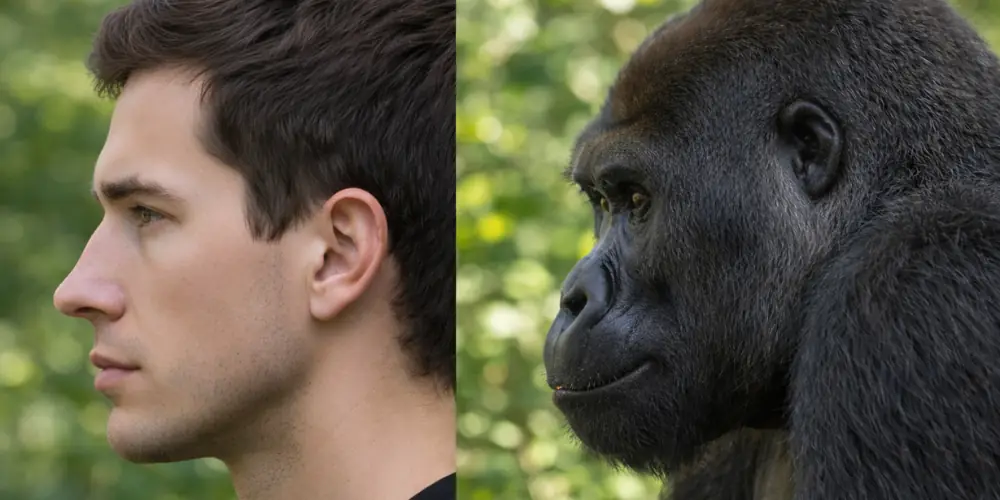
Humans stand out in the primate world not just for intelligence, but also for that distinctive bump at the front of the lower jaw, the chin. Scientists long wondered why humans alone developed this feature.
Recent research suggests the chin is likely an evolutionary accident rather than a trait shaped by natural selection.
Anthropologist Noreen von Cramon-Taubadel and her team published a study in PLOS One arguing that the chin evolved as a “spandrel,” meaning it emerged as a byproduct of other structural changes. Unlike traits designed for chewing, speaking, or aesthetic appeal, the chin seems to result from facial evolution rather than serving a specific survival function.
Humans are the only primates with true chins. Not even Neanderthals, Denisovans, or our closest ape relatives developed one. Researchers analyzing craniofacial evolution found that chins appeared when skulls reshaped themselves over generations.
Brain Expansion and Jaw Reduction
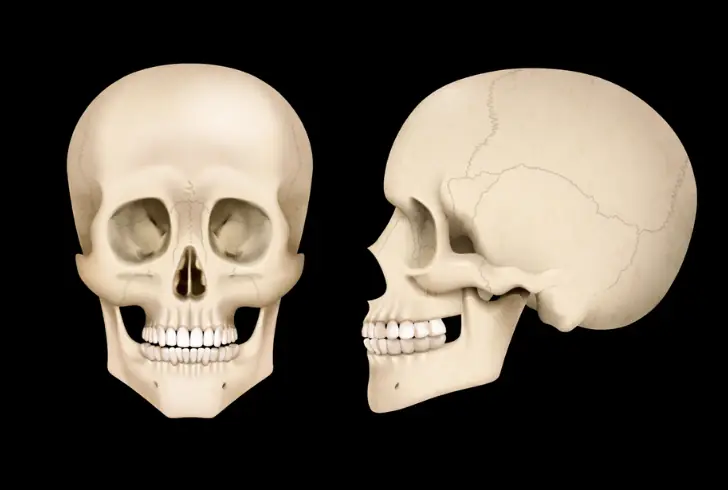
As early humans evolved larger brains, the angle of the cranium shifted, while lower faces and jaws gradually shrank. Teeth became smaller, reducing overall jaw size. The chin likely formed simply as bone filling the space left by these changes, rather than as a structural adaptation to strengthen the jaw or process tough foods.
The researchers examined specific chin features and found minimal evidence that natural selection directly shaped them. Instead, the chin emerged as a geometric consequence of skull adjustments over thousands of years.
A Quirky Feature With No Direct Function
Humans may flaunt chins in selfies or see them as symbols of attractiveness, yet science shows their presence is largely accidental. This finding challenges the idea that every human feature has a survival purpose. The chin stands as a visual marker of how evolution can leave unique traces without clear functional reasons.
Humans’ chins highlight the unexpected creativity of evolution. They remind us that some traits appear simply from structural shifts in anatomy, not design, making humans distinct in the animal kingdom.
The human chin may look purposeful, but it shows evolution’s surprises, how some traits appear from structural shifts, not direct design.