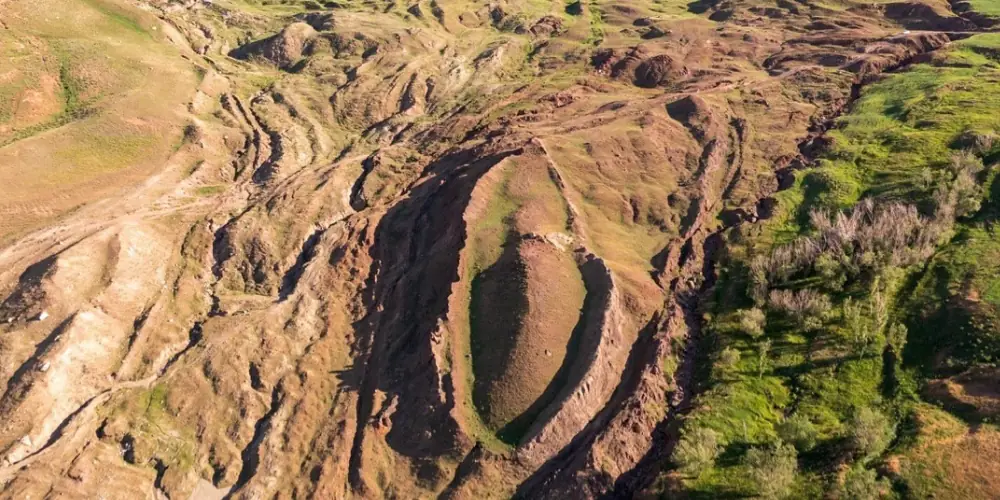
A remarkable discovery in Turkey may shed new light on one of history’s most enduring biblical stories. Researchers from Turkey and the United States have reported evidence of human activity in the region surrounding Mount Ararat, the tallest peak in Turkey, where some believe Noah’s Ark came to rest. This finding could offer fresh insight into the ancient tale described in the Old Testament.
The story of Noah’s Ark recounts God instructing Noah to build a massive vessel to save his family and Earth’s creatures from a catastrophic flood. After 150 days of deluge, the ark is said to have settled atop the Ararat mountains, sometime between 5500 and 3000 BC.
Discoveries on Mount Ararat

Professor Faruk Kaya, vice rector at Arbrahim Çeçen University (AÇÜ), explained to Turkish publication Hurriyet that laboratory results point to human presence in the area during the Chalcolithic period.
He explained that early findings suggest human presence in the area as far back as the Chalcolithic period, roughly 5500 to 3000 BC.
Researchers involved in the project said laboratory results also suggest activity in the region during that period, though they warned against rushing to conclusions. They stressed that nothing in the current data confirms the ship’s age, and that far more detailed analysis is needed before any definitive claims can be made.
Site Investigation
Teams from Istanbul Technical University (TÜ) and AÇÜ spent more than a year gathering samples to better understand the area’s historical layers. Biblical descriptions place the ark at roughly 300 cubits long, 50 cubits wide, and 30 cubits high—about 515 feet by 86 feet by 52 feet.
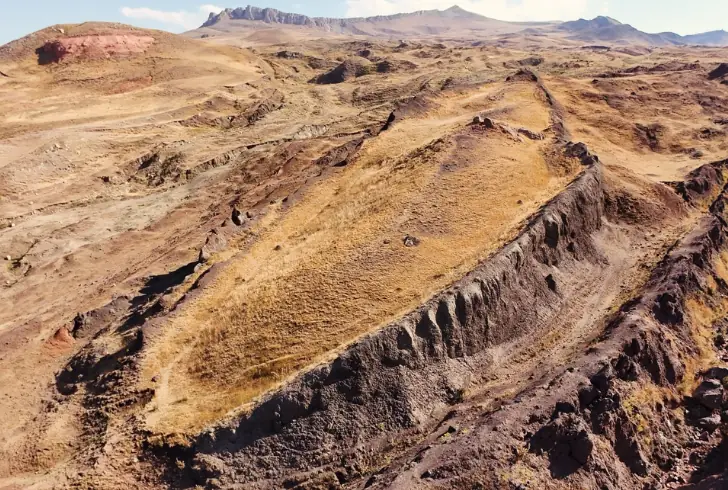
Not all specialists are convinced by the excitement surrounding the site. Several archaeologists argue that the shapes identified in the terrain may be geological formations rather than traces of an ancient vessel.
Dr. Andrew Snelling, a young-Earth creationist with a doctorate from the University of Sydney, added that Mount Ararat itself formed long after the period described in the biblical flood story. He also pointed out that there is no scientific evidence supporting a global flood.
Implications and Continuing Research
If evidence of early human activity around the site is confirmed, it could help researchers understand how ancient communities lived in the Ararat region thousands of years ago. Lab findings indicate activity between 5500 and 3000 BC, underscoring the area’s historical importance.
Although the biblical ark is described as measuring more than 500 feet in length, many experts maintain that the visible formations are natural and unrelated to a man-made structure.
The Mount Ararat site continues to attract interest from historians and archaeologists. While signs of early settlement do not validate the ark narrative, they highlight why the area deserves ongoing, multidisciplinary investigation.